
In the 1990s and 2000s, many prominent Democrats have moved from emphasizing strong borders, penalties for unlawful entry, and deportations for illegal immigrants. That position has shifted to prioritizing protections, public benefits and even obstruction with federal immigration authorities.
That shift did not happen overnight. It unfolded through a series of political moments: bipartisan border-security votes in the mid-2000s; the post-2012 rise of executive-branch immigration policy; the leftward pull of primary politics in 2019–2020; and the Biden-era surge in border encounters that intensified pressure on Democrats to reconcile humanitarian goals with operational control at the border. Along the way, Democratic governance in major states and cities increasingly relied on “sanctuary”-style rules that restrict local cooperation with Immigration and Customs Enforcement (ICE), reframing the debate as one about community trust, civil liberties, and public safety.
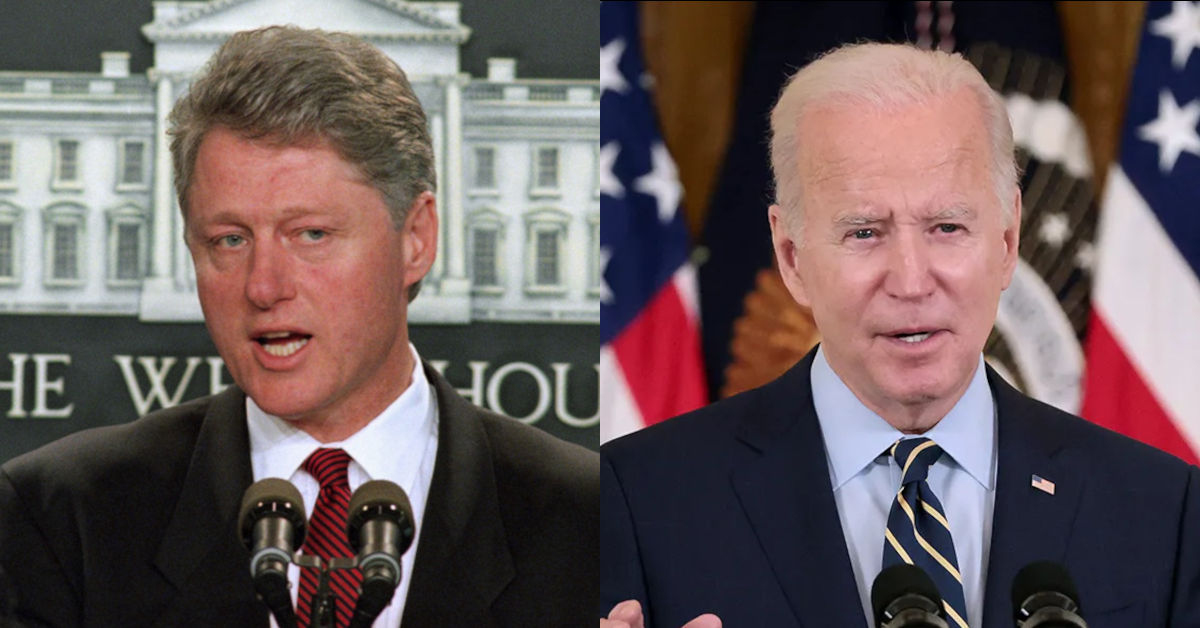
There is a clear shift in Democratic positioning across 26 years—from Bill Clinton’s 1995 warning that “All Americans are rightly disturbed by the large numbers of illegal immigrants entering this country” to Joe Biden’s 2021 call for “a pathway to citizenship for 11 million undocumented people in America.”
Democrats supported strong enforcement on illegal immigration
In the late 1990s and 2000s, Democrat politicians often spoke about illegal immigration as a rule-of-law issue while pairing that message with support for some form of eventual legalization for certain long-term residents. Prominent Democrats were willing to back border security measures and explicit consequences for undocumented immigrants.In 1998, President Bill Clinton stated at a commencement address at Portland State University, “Let me be clear: I also think it’s wrong to condone illegal immigration that flouts our laws, strains our tolerance, taxes our resources.”
Look at how far left the Dems moved. In 2009, Barack Obama tells illegals in our country that if they want to become legal, they will need to pay a fine, learn English and get in the back of the line of any legal immigrants. Today’s democrats are actively fighting against ICE. pic.twitter.com/zZLboxvJW2
— Ackchyually (@Ackchyually2000) December 4, 2025
When speaking about illegal immigrants in 2008, Barack Obama stated “We should require them to pay a fine, learn English, and go to the back of the line…” while campaigning for president at the National Council of La Raza. Two years later, Obama stated the presence of illegal immigrants makes a mockery of legal immigrants.
Senator Chuck Schumer stated in 2009, “Illegal immigration is wrong, and a primary goal of comprehensive immigration reform must be to dramatically curtail future illegal immigration.” in his address at the 6th Annual Immigration Law and Policy Conference. Using the, now considered offensive term “illegal immigrant” he advocated for the immigrants to register their presence with the U.S. government or face deportation.
This earlier posture of “enforce the rules, then reform the system” did not mean Democrats uniformly supported mass deportation. It often came with an emphasis on practicality and proportionality; the idea that enforcement should be real, but that removing everyone without lawful status was neither feasible nor consistent with broader national values. Still, the tone was more comfortable with the language of “illegal immigration” as a core problem to be solved through deterrence, controls, and penalties.
The Democrats Leftward Shift on Immigration
Over time, the Democrat party’s emphasis began to change. One way to describe the shift is that the Democratic coalition became more willing to treat the presence of undocumented immigrants not only as a legal-status question, but as a civil-rights and community-membership question. This began to reframe policy priorities away from deterrence and toward insulation limiting deportation risk, restricting information-sharing, and expanding eligibility for certain state and local services.
The most notable shift was when the DACA in June of 2012 which was a federal program aimed at protecting any immigrant who was brought to the United States before turning 16 from deportation. The Deferred Action for Childhood Arrivals was enacted with the failure of Congress to pass the DREAM Act.
In one of the first widely publicized instances of direct political obstruction of federal immigration in modern politics, Oakland Mayor Libby Schaaf drew national controversy in 2018 by publicly warning her community of an imminent U.S. Immigration and Customs Enforcement (ICE) operation aimed at undocumented immigrants. She claimed she acted to protect vulnerable families and urged residents to know their rights.
Two years later, the Democrats were faced with the sudden rise of populism in their party with the 2016 campaign of Bernie Sanders who contributed to the leftward shift on illegal immigration. During his debate with Hillary Clinton Sanders stated he agreed with then-President Obama’s executive order for DACA but argued that he would go further by exercising his executive powers to grant amnesty to all 11 million undocumented immigrants.
During the 2020 presidential election, the democratic presidential debate, moderator Savannah Guthrie asked “Raise your hand if your government plan would provide coverage for undocumented immigrants.” All 10 presidential candidates, including Kamala Harris, present at the debate raise their hands solidifying their intent to provide healthcare for illegal immigrants.
In the same timeframe, a second question moved from benefits to criminal law; whether unauthorized border crossings should be treated as a civil violation rather than a criminal offense. PBS reported that most candidates onstage pledged to “decriminalize” border crossings by shifting them out of the criminal code.
During the 2020 election, Kamala Harris was a presidential candidate who promised to give amnesty to the roughly 11 million undocumented immigrants living in the United States. She also pledged executive action to protect Dreamers, and end use of ICE detainers. Harris, was among the other Democratic primary contenders who also stated she would decriminalize unauthorized border crossings reducing the offense to a civil infraction.
In parallel to these events during the 2020 primary election, Joe Biden made several statements pro illegal immigration statements. He pledged a 100-day moratorium on deportations if he became president. He also promised to protect sanctuary cities in 2019, however, in 2007 he argued that he would not allow sanctuary cities to exist by ignoring federal law. Also, during a democratic primary debate, Biden argued for asylum seekers to come to the U.S. border for refuge in his infamous “surge the border” statement.
The political logic of a primary is different from a general election, but the commitments made in that environment often shape governance priorities later—particularly when the party’s activist base demands follow-through. Joe Biden’s immigration rhetoric during the Democratic primary began to manifest into reality during his term as president
Border Policy Reversal and the Political Consequences of the Biden Administration’s Immigration Approach
Illegal immigration became a topic of increasing contention during Joe Biden’s presidency with several controversies. President Biden halted the border wall construction and ended the “Remain in Mexico” which restricted asylum seekers to wait in Mexico for their claims to process. By mid-2024, there were more than 10.8 million encounters with illegal migrants. By October 2024, 2.5 million people were allowed into the United States interior waiting their court dates for asylum. Soon, several high profile stories began to emerge including schools and other community buildings being used to shelter migrants in major cities such as Chicago and New York which displaced local school students. Stories of Venezuelan migrant gangs taking over apartment complexes began appearing in local and national headlines.
The message was clear for those wanting to enter the country illegally. Donald Trump’s strong border messaging and deportation policy was reversed by Joe Biden’s welcoming of asylum seekers. A Congressional Research Service (CRS) reported that migrant encounters at the Southwest border reached their highest recorded annual level to 2.5 million in FY2023.
As encounters rose, so did public attention to what happened after people were encountered, detained, removed, expelled (during the Title 42 period), or released pending immigration proceedings. A FactCheck.org analysis in February 2024 reported that about 2.5 million people through October had been released into the United States in various processing categories during the Biden presidency, including releases with notices to appear or report, prosecutorial discretion, and parole.
By mid-2024, the Biden administration moved toward more restrictive border policies in the wake of public scrutiny in response to public pressure.
This created a complex political moment: Democrats were being pulled in two directions at once; toward restrictions that signaled enforcement and deterrence, and toward a base that had, for years, been promised more expansive protections and fewer deportations.
Kamala Harris as a case study: leftward primary positions and later recalibration
Despite mounting pressure the Democratic presidential candidate Vice President Kamala Harris had mixed messaging on border and immigration enforcement during her 2024 presidential election
Materials published by the ACLU include a questionnaire response document associated with Harris that reflects policy preferences aligned with the party’s more progressive immigration posture—support for protections for Dreamers, limiting enforcement tools, and other approaches aimed at reducing deportation risk.
But general-election politics, and the governance realities highlighted during the Biden years, encouraged recalibration. In August 2024, PBS reported on Harris defending shifts away from some earlier positions, including on decriminalizing illegal border crossings.
Democrat Resistance to Donald Trump’s Immigration Policy Intensifies
As President Donald Trump has renewed and expanded federal deportation efforts during his second term, Democratic officials across several states and cities have been outspoken about protecting undocumented migrants living in the United States. The resistance has taken multiple forms, ranging from formal sanctuary policies and executive directives to public condemnations of immigration enforcement tactics and, in a handful of cases, confrontations that have led to arrests or criminal charges.
At the state level, some of the most consequential actions predate Trump’s return to office but were designed explicitly to limit cooperation with federal immigration authorities. In California, then Gov. Jerry Brown signed the California Values Act, known as SB 54, in 2017. The law restricts state and local law enforcement agencies from using resources to assist federal immigration enforcement, except in limited circumstances. SB 54 effectively made California a sanctuary state, a framework that Democratic leaders have continued to defend as Trump’s deportation agenda has intensified.
Washington state adopted a similar posture. Gov. Jay Inslee signed the Keep Washington Working Act, which limits the role of state agencies and local police in federal immigration enforcement and bars inquiries into immigration status in most routine interactions. New Jersey followed suit in 2018, when Gov. Phil Murphy issued the Immigrant Trust Directive, instructing law enforcement to reduce cooperation with federal immigration authorities in order to encourage immigrant communities to report crimes without fear of deportation. Illinois enacted the TRUST Act in 2017 under then-Gov. Bruce Rauner, limiting when local police may honor federal immigration detainers.
In Los Angeles, Mayor Karen Bass has taken a more direct, city-focused approach. Following reports of immigration enforcement actions in the city, Bass issued executive directives instructing city departments to provide support to immigrants impacted by federal operations, including access to emergency cash assistance and legal resources. She has also publicly condemned Immigration and Customs Enforcement tactics, saying they “sow terror” in immigrant neighborhoods and undermine trust between residents and local government.
While most Democratic resistance has occurred through legislation and executive action, some incidents have escalated into personal legal jeopardy for elected officials and candidates. In May 2025, Rep. LaMonica McIver was charged after federal prosecutors said she forcibly impeded and interfered with Department of Homeland Security officers at a Newark-area detention facility during a protest. Prosecutors alleged that McIver obstructed officers performing their official duties, an accusation her legal team has contested.
In New York City, Comptroller Brad Lander was arrested after linking arms with an individual whom ICE officers were attempting to detain at an immigration court. Lander was later released, and his office described the incident as an act of solidarity with immigrants facing removal proceedings.
Another high-profile case involved Democratic congressional candidate Kat Abughazaleh, who was charged in 2025 after authorities said she and others attempted to block a federal agent’s vehicle outside an ICE facility. Abughazaleh pleaded not guilty, and the case has become a flashpoint in debates over the line between protest and unlawful interference with federal officers.
The Trump administration has argued that such actions, whether legislative or physical, undermine the rule of law and interfere with federal authority over immigration. The Department of Justice has emphasized that immigration enforcement is a federal responsibility and that obstruction of officers will be prosecuted, regardless of an individual’s political office or affiliation.
Democratic officials, by contrast, frame their actions as necessary protections for immigrant communities. They argue that aggressive deportation strategies deter crime reporting, separate families, and disproportionately affect long-established residents with deep ties to their communities. Sanctuary policies, they say, are intended to draw a clear boundary between local governance and federal immigration enforcement.
As deportations continue, the clash between the Trump administration and Democratic-led states and cities shows little sign of abating. The conflict now spans courtrooms, city halls, and statehouses, reflecting a broader national debate over immigration policy, federalism, and the limits of political resistance.
Sources:
- President William Jefferson Clinton State of the Union Address (As Prepared) – White House (Archive), January 24 1995. Clinton said Americans were disturbed by the large numbers of illegal immigrants and pledged stronger border security, https://clintonwhitehouse6.archives.gov/1995/01/1995-01-24-president-state-of-the-union-address-as-prepared.html
- Remarks in a Naturalization Ceremony for Essential Workers and United States Servicemembers – The American Presidency Project, July 2 2021. Biden promised an immigration bill with a pathway to citizenship for 11 million undocumented people, https://www.presidency.ucsb.edu/documents/remarks-naturalization-ceremony-for-essential-workers-and-united-states-servicemembers
- Commencement Address at Portland State University, Portland, Oregon – The American Presidency Project, June 13 1998. Clinton said it’s wrong to condone illegal immigration that flouts laws and strains resources, https://www.presidency.ucsb.edu/documents/commencement-address-portland-state-university-portland-oregon
- Image of tweet by @Ackchyually2000 – X (Twitter), December 4 2025. A photo of a tweet claims Democrats moved far left on immigration and now fight against ICE, https://pic.twitter.com/zZLboxvJW2
- Tweet by @Ackchyually2000 – X (Twitter), December 4 2025. The tweet contrasts Obama’s 2009 stance (fines, English, back of the line) with Democrats now resisting ICE, https://twitter.com/Ackchyually2000/status
- Remarks at the 2008 National Council of La Raza Annual Meeting in San Diego, California – The American Presidency Project, July 13 2008. Obama said people who broke the law should pay a fine, learn English and go to the back of the line, https://www.presidency.ucsb.edu/documents/remarks-the-2008-national-council-la-raza-annual-meeting-san-diego-california-0
- Remarks by the President on Comprehensive Immigration Reform in El Paso, Texas – White House (Archive), May 10 2011. Obama said the presence of so many illegal immigrants makes a mockery of legal immigration, https://obamawhitehouse.archives.gov/the-press-office/2011/05/10/remarks-president-comprehensive-immigration-reform-el-paso-texas
- Remarks at the 6th Annual Immigration Law and Policy Conference – VoteSmart (Just Facts), June 24 2009. Chuck Schumer declared illegal immigration is wrong and comprehensive reform must curtail it, https://justfacts.votesmart.org/public-statement/462918/senator-chuck-schumer-remarks-at-the-6th-annual-immigration-law-and-policy-conference
- What is DACA and what is the status as recipients are being detained by ICE? – El Paso Times via Yahoo News, October 26 2025. Explains DACA protects young immigrants brought as children but doesn’t provide a path to citizenship, https://au.news.yahoo.com/guatemala-denies-chilean-green-card-163048986.html
- Oakland Mayor Warned Residents About ICE Raids – Libby Schaaf Sparks National Controversy – Whole Memory Project, November 27 2024. The article recounts how Mayor Schaaf warned her community about an imminent ICE raid to protect undocumented immigrants, https://www.thewholememory.com/politics/oakland-mayor-warned-residents-about-ice-raids/
- Read the Full Transcript of the Sixth Democratic Debate in Milwaukee – TIME, February 11 2016. Transcript shows Bernie Sanders would use executive orders to grant amnesty if Congress did not act, https://time.com/4213181/democratic-debate-milwaukee-transcript/
- Most Democrats promise to decriminalize border crossings during 2020 debate – PBS NewsHour, June 27 2019. Report notes nearly all candidates raised their hands to make illegal border crossings a civil offense, https://www.pbs.org/newshour/politics/most-democrats-promise-to-decriminalize-border-crossings-during-2020-debate
- ACLU 2020 Presidential Candidate Questionnaire: Kamala Harris – American Civil Liberties Union, August 2024. Harris pledged amnesty for roughly 11 million undocumented immigrants, protect Dreamers and end ICE detainers, https://assets.aclu.org
- Democratic Debate: Biden vs. Sanders – Live Analysis and Fact Check – NPR, March 15 2020. Live blog notes Biden proposed a 100-day moratorium on deportations with only felons deported afterward, https://www.npr.org/2020/03/15/814987999/democratic-debate-biden-vs-sanders-live-analysis-and-fact-check
- Fact Check: Video Claims to Show Biden Saying He’d Prohibit Sanctuary Cities in 2007. Here’s What We Found – Yahoo News/Snopes, January 31 2024. Article confirms Biden said in a 2007 debate he would not allow cities to ignore federal law, opposing sanctuary cities, https://www.yahoo.com/news/fact-check-video-claims-show-025540869.html
- Breaking Down the Immigration Figures – FactCheck.org, February 27 2024. Analysis reports that 2.5 million of 6.5 million border encounters were released into the U.S. interior during Biden’s term, https://www.factcheck.org/2024/02/breaking-down-the-immigration-figures/
- Aurora video shows suspected gang members pointing guns inside Colorado apartments, chief says it ‘must be stopped’ – CBS Colorado, June 17 2025. Story details Venezuelan immigrant gang activity in an Aurora apartment complex used to illustrate fears of migrant gangs taking over housing, https://www.cbsnews.com/colorado/news/aurora-video-shows-suspected-gang-members-pointing-guns-inside-colorado-apartments-chief-says-it-must-be-stopped/
- The Impact of the ‘Securing the Border’ Rule on Migrant Encounters and Processing – Congressional Research Service (Congress.gov), Updated December 2 2024. CRS report notes FY2023 migrant encounters at the Southwest border hit a record 2.5 million, https://www.congress.gov/product/pdf/IN/IN12224
- Breaking Down the Immigration Figures – FactCheck.org, February 27 2024. Cited again to emphasize that 2.5 million migrants were released into the U.S. interior pending court dates, https://www.factcheck.org/2024/02/breaking-down-the-immigration-figures/
- Harris defends shifting positions on fracking and decriminalizing illegal border crossings – PBS NewsHour/AP, August 30 2024. Article reports Harris said illegal border crossings should still have consequences, reflecting her moderating stance, https://www.pbs.org/newshour/politics/harris-defends-shifting-positions-on-fracking-and-decriminalizing-illegal-border-crossings
- California Senate Bill 54 – Wikipedia, October 5 2017. Entry explains that SB 54 (California Values Act) signed by Gov. Jerry Brown limits state and local law-enforcement cooperation with federal immigration enforcement, https://en.wikipedia.org/wiki/California_Senate_Bill_54
- Keep Washington Working Act FAQ – Washington State Attorney General’s Office, 2019. FAQ explains the 2019 law prohibits local law enforcement from participating in federal immigration enforcement and bars most inquiries about immigration status, https://www.atg.wa.gov/keep-washington-working-act-frequently-asked-questions
- Mayor Karen Bass signs executive directive in support of immigrant communities – CBS Los Angeles, July 11 2025. Article describes Bass’s directive requiring city departments to develop plans and liaisons to support immigrants after federal raids, https://www.cbsnews.com/losangeles/news/mayor-karen-bass-signs-executive-directive-support-immigrant-communities/
- Congresswoman Charged for Forcibly Impeding and Interfering With Federal Officers – U.S. Department of Justice, June 10 2025. DOJ press release details indictment of Rep. LaMonica McIver for obstructing DHS officers at a detention facility, https://www.justice.gov/usao-nj/pr/congresswoman-charged-forcibly-impeding-and-interfering-federal-officers
- Brad Lander, NYC comptroller and mayoral candidate, arrested by ICE agents – CBS New York, June 18 2025. Article reports Lander was arrested by ICE at an immigration court for allegedly impeding an arrest, though he was later released,https://www.cbsnews.com/newyork/news/brad-lander-arrested/Democratic contender for Congress indicted over Chicago ICE protests – The Guardian, October 29 2025. Guardian report says Kat Abughazaleh and others were indicted for hindering a federal agent’s vehicle during an ICE protest,https://www.theguardian.com/us-news/2025/oct/29/kat-abughazaleh-indicted-democrat-running-congress